Bird Safe Glass An Innovative 1st Surface Solution
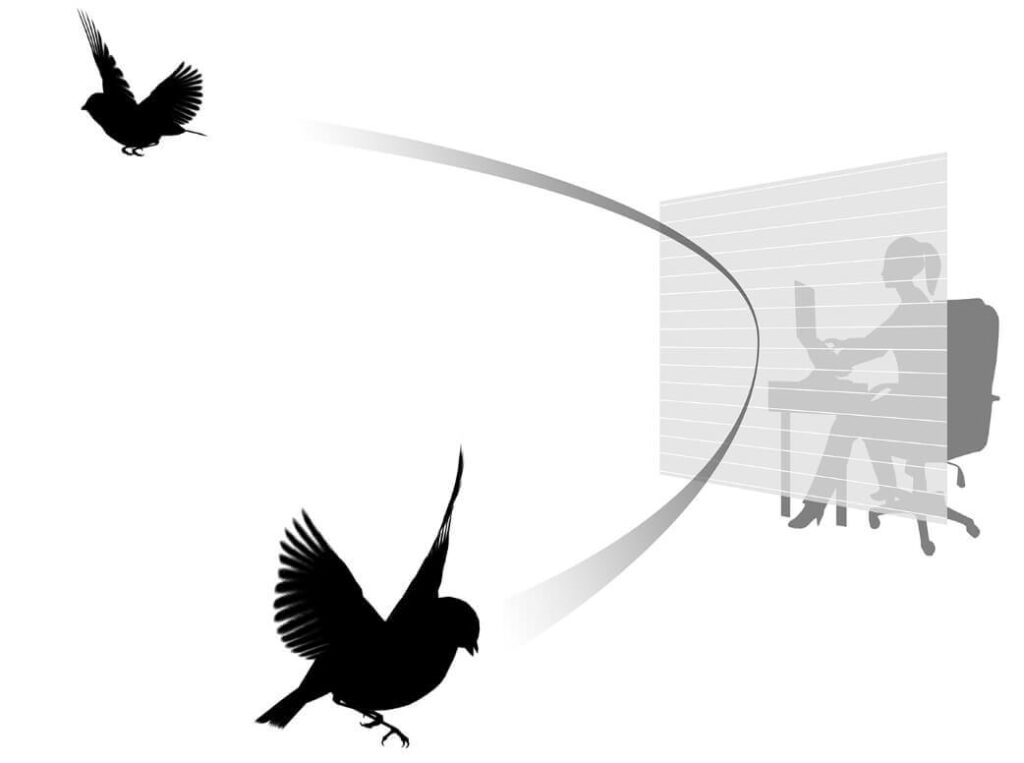
Glass causes a major threat to birds due to its transparency and reflectivity. When vegetation is reflected in the glass, birds are not able to distinguish between a real tree and its image. See how Gardner Walker can help you prevent birds from hitting windows — and compare all four AviProtek® bird safe glass solutions below.
1 Billion
2" x 4"
4 Solutions
How to stop birds from hitting windows
In order to stop bird window collisions on glass façades, certain well-researched* “rules of thumb” need to be adhered to — most notably the “2×4 rule”: two inches or less of horizontal space, or four inches or less of vertical space, should be left untreated.
Research has also confirmed that visual markers are more effective for birds when they’re on the outside (first) surface of the glass, giving birds a greater chance to identify the surface from all angles and in varied weather conditions. Many regulations in place today reference the 2×4 rule and this first-surface treatment.
Note: The above design parameters are supported by leading research scientists in the field, such as Dr. Daniel Klem.
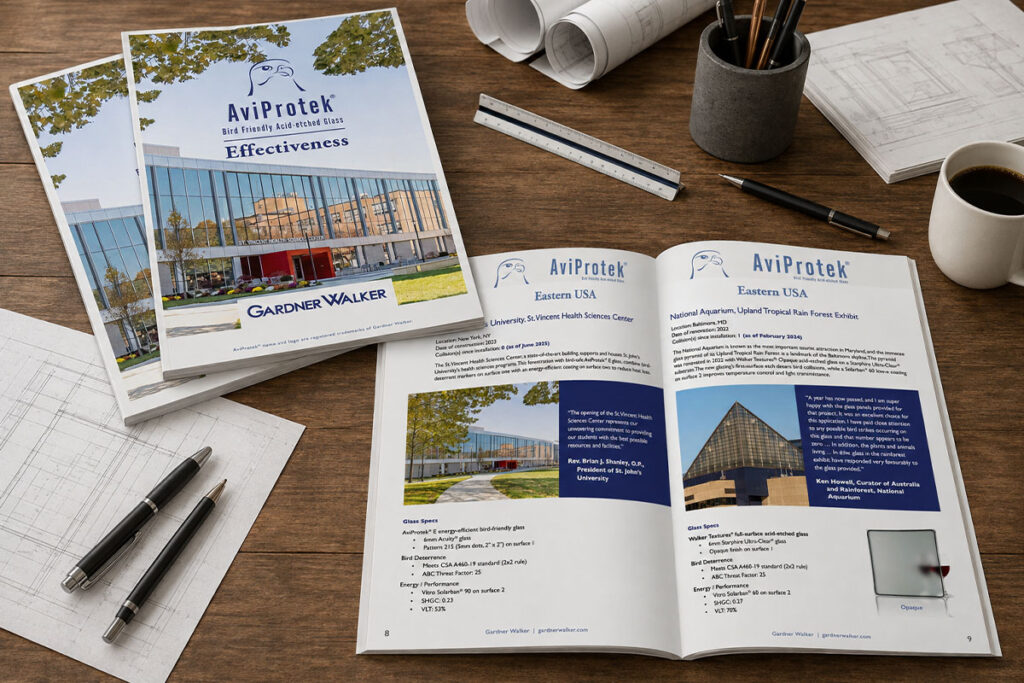
The Effectiveness of AviProtek® Bird-Friendly Glass
For more than a decade, Gardner Walker has been developing solutions to reduce bird collisions. Field results speak for themselves: AviProtek® patterns significantly reduce bird collisions and, in some applications, can eliminate them entirely. Discover “The Effectiveness of AviProtek®,” our collection of case studies from across the United States and Canada.
Bird Safe Glass Explained
Bird Safe Glass Explained — Episode 1: The Issue
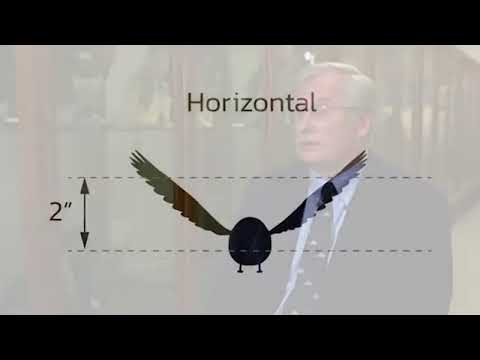
Bird Safe Glass Explained — Episode 2: Solutions
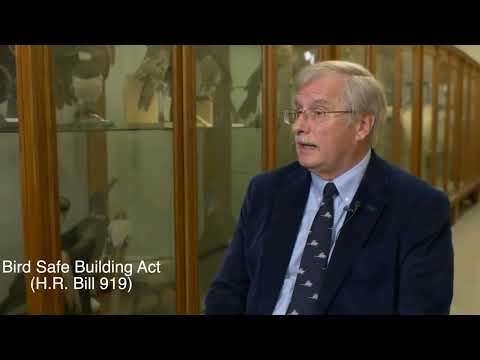
Bird Safe Glass Explained — Episode 3: The Legislation
Frequently asked questions about bird safe glass
What is bird safe glass?
Bird safe glass or bird friendly glass has a pattern or design on the glass itself. Since glass is invisible to birds, the pattern is there to alert them of the solid barrier. This pattern or design is ideally on the exterior surface of the glass and is known as a visual marker.
How does bird safe glass work?
Bird-safe glass works by transforming window glass into a barrier that birds will see and avoid. Glass that can be considered safe for birds has patterns (visual markers) across the entire surface to mute or distort the reflections of surrounding elements. Often the visual markers will follow the “2×4 rule,” but the closer the pattern elements are to each other, the more protection the pattern provides.
How many birds are killed by colliding into windows?
According to leading scientists, up to 1 billion birds are killed every year due to colliding into windows. Dr. Daniel Klem, who has been studying this phenomenon for more than four decades, shares his experience and knowledge in his white paper, “The building industry and bird conservation.”
What do birds see when they look at building glass?
Glass is a major threat to birds because it is invisible to them. Birds are deceived by the transparency and reflectivity of glass, mistaking it for open sky or vegetation on the other side. Creating a pattern on the first surface of the glass reduces the number of collisions. The 2×4 rule and testing methods are discussed in “Technical design of bird friendly glass.”
Are bird collisions happening only during migration?
Contrary to popular belief, bird collisions aren’t just a migratory-season problem — they happen all year round. During migration, bird volume increases by about 40% depending on the region, so collisions rise twice a year, but the issue remains constant. The most effective solutions have visual markers on the exterior surface of the window.
Do tall buildings affect birds’ behavior?
Birds are attracted to light. Tall buildings reflect light and are often lit at night, drawing birds into areas where they wouldn’t naturally go. At ground level they can’t see glass and may fly directly into windows. Toronto was the first city to incorporate bird-friendly guidelines into its green building standard.
What are the bird deterrence legislations in North America?
Bird deterrence legislation in North America is mostly driven by local authorities at the state, provincial, or city level. Notable examples include San Francisco’s Standards for Bird-Safe Buildings, New York City’s Local Law 15, and Illinois’s Bird-Safe Buildings Act. In Canada, CSA A460 provides a national standard, and cities including Toronto and Ottawa have their own bird-safe design guidelines. The National Glass Association’s Bird Friendly Design Guide supports the 2×4 rule industry-wide. We suggest checking with local authorities to see which regulations apply to your project, or reaching out to your local Gardner Walker Architectural Manager for guidance.
What is bird frit?
“Bird frit” is a term used in the building industry in reference to bird-friendly glass. Frit is a ceramic paint baked onto the surface of glass — a commonly used process in the glass industry. For a bird-safe product to be effective, its patterns must be visible to birds; the AviProtek® line uses acid-etched patterning rather than frit to deter bird strikes.
What is the 2×4 rule?
The 2×4 rule is a prescriptive standard for pattern spacing in bird friendly glazing: most birds won’t attempt to fly through spaces smaller than 2 inches high or 4 inches wide. It was developed by Dr. Daniel Klem based on his field experiments on bird-glass collisions, and it underlies most North American bird safe design guidelines.
Compare AviProtek® bird safe glass options
| Feature | AviProtek® Turbo High Volume · This page | AviProtek® Standard | AviProtek® E Low-e Bird Safe | AviProtek® T Transparent |
|---|---|---|---|---|
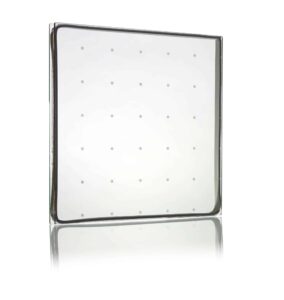
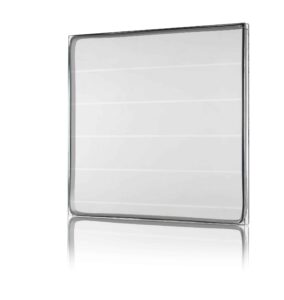
| Bird friendly pattern | Acid-etched on surface 1 | Acid-etched on surface 1 | Acid-etched on surface 1 | UV-reflective on surface 1 |
| Energy-efficient low-e coating | Available on surface 2 | Can be used on surface 3 | Included on surface 2 | Can be used on surface 3 |
| Visibility of patterns to the human eye | Visible but unobtrusive | Visible but unobtrusive | Visible but unobtrusive | Almost invisible |
| Compliant with bird safe design requirements across North America | ✓ | ✓ | ✓ | ✓ |
| Threat factor ratings from ABC | ✓ | ✓ | ✓ | No |
| Impact on light flow | No impact | No impact | Minimal impact | No impact |
| EPD and HPD available | HPD only | ✓ | ✓ | ✓ |
Bird Friendly Glass Products
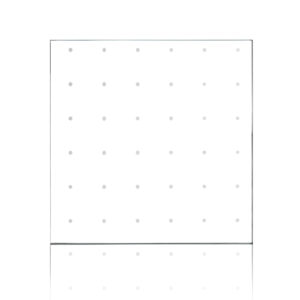
AviProtek® Turbo
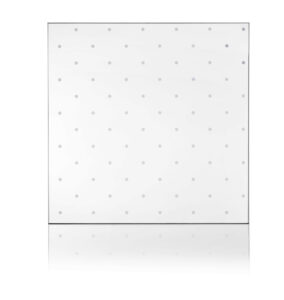
AviProtek®
AviProtek® E
AviProtek® T
More information on bird safe windows
Bird Safe Glass Articles
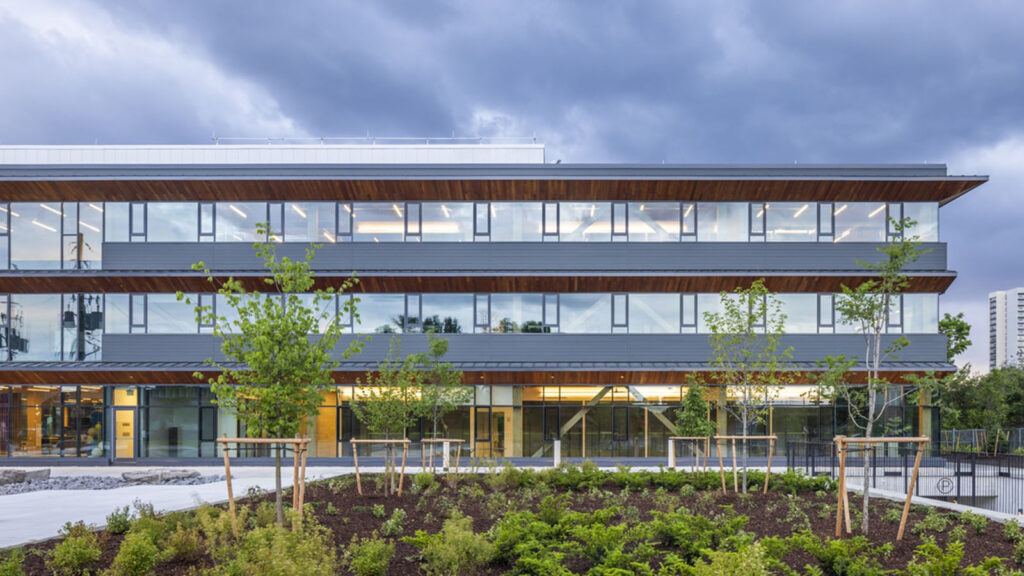
The OSSTF Headquarters: Meeting Sustainable Development Goals with AviProtek® E
The new headquarters for the Ontario Secondary School Teachers’ Federation, designed by Moriyama Teshima Architects…

Q&A: All About AviProtek® Turbo, the New Bird Friendly Glass Solution by Gardner Walker
With Vice President of Products and Business Development, Marc Deschamps Gardner Walker is launching AviProtek®…
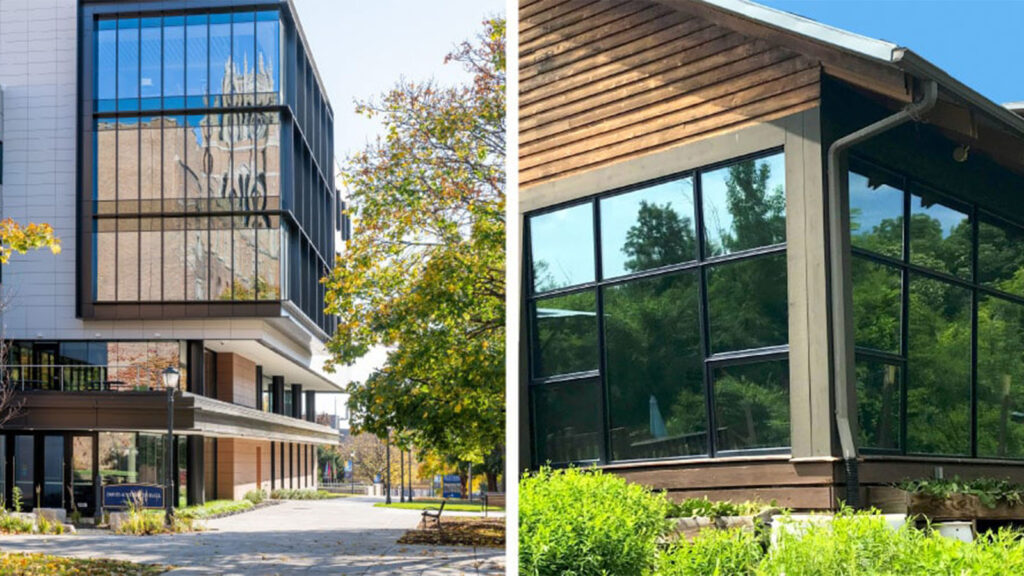
Seeing Clearly through Transparent Bird Friendly Glass
What’s the ideal bird friendly solution? The answer to this question is different for every…