Executive Summary
Bird-friendly glass should be evaluated not only by laboratory tests and prescriptive design standards alone, but through documented performance after installation. Existing testing measures cannot fully reproduce the changing reflections, transparency, architectural design, weather, seasons, and bird behavior found at real sites. Post-installation monitoring therefore provides the most credible evidence that a product actually reduces collisions.
Drawing on case studies from Cedar Hill Library, the National Aviary, and the Nature Place, this article highlights how solutions such as AviProtek® have demonstrated exceptional reductions in bird collisions over extended monitoring periods, defying laboratory threat ratings that pointed to different conclusions. These findings illustrate the value of real-world evidence above that of conventional testing. Thus, by incorporating consistent, quantifiable post-monitoring can validate product outcomes, align future specifications, and give architects, building owners, regulators, and conservation stakeholders greater confidence.
Full Article
In the early 1970s, Dr. Daniel Klem Jr., was among the first to investigate and then quantify the massive scale at which window strikes contribute to bird mortality. While the field of ornithology was already taking shape mid-century, most research into the matter focused on natural history and biology rather than behaviour and bird to human interactions.
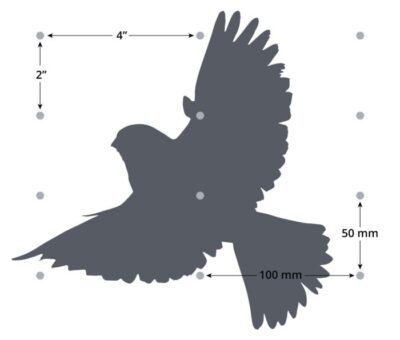
In the decades since, research on how birds interact with human environments has become more commonplace and findings of the scientific community become central to the development of bird-friendly design principles and products. Among his contributions was highlighting the importance of visible markers, appropriate spacing, and surface placement adhering to specific rules (such as the 2×4 rule), all to help birds recognize surfaces as solid barriers.
The enduring question, however, has been how to best evaluate whether a product achieves that goal or not.
Testing has historically played a significant role in the evaluation process of bird-friendly glass. From the 1970s to this day, many jurisdictions rely almost entirely on guidelines and self-reported criteria promoted by manufacturers and published through university research grants. However, no matter how rigorous the laboratory conditions might be, none of the current testing methods are able to coherently reproduce the complex conditions in which birds interact with a real-world building facade.
It bears noting, however, that prescriptive approaches, which involve applying visual markers to glass to help prevent bird collisions, have also been incorporated into various building regulations. The Canadian standard CSA A460 has been referenced by the National Glass Association in its educational material “Best Practices for Bird-Friendly Glazing Design Guide” and the American Society for Testing and Materials (ASTM) is considering adopting a similar approach in its standard in the near future. The prescriptive approach has been implemented in cities such as Toronto and San Francisco, with encouraging results. While these regulations represent an important part of the bird-safe practices, compliance with prescriptive criteria alone does not guarantee that a glazing solution will be effective in preventing bird collisions in every situation.
In any event, whether through testing or prescriptive approaches, meaningful evidence for the efficiency of bird-friendly glass must come after installation, when bird-safe glass can be monitored on real buildings under real environmental conditions. As such, when consistently monitored, post-installation results demonstrate a product’s ability to truly reduce bird-to-glass collisions that would not emerge from the data in controlled testing environments.
The Invisible Barrier: Why Collisions Happen
Let’s start with the basics: birds don’t see and interact with glass the same way we do.
To a person, a window is often fairly obvious even when we cannot see the particular materials making up its composition. We understand on an intuitive level the difference between interior and exterior spaces, and can often recognize a reflection, even without an in-depth knowledge of architecture, we know that windows are often simply where we expect them to be.
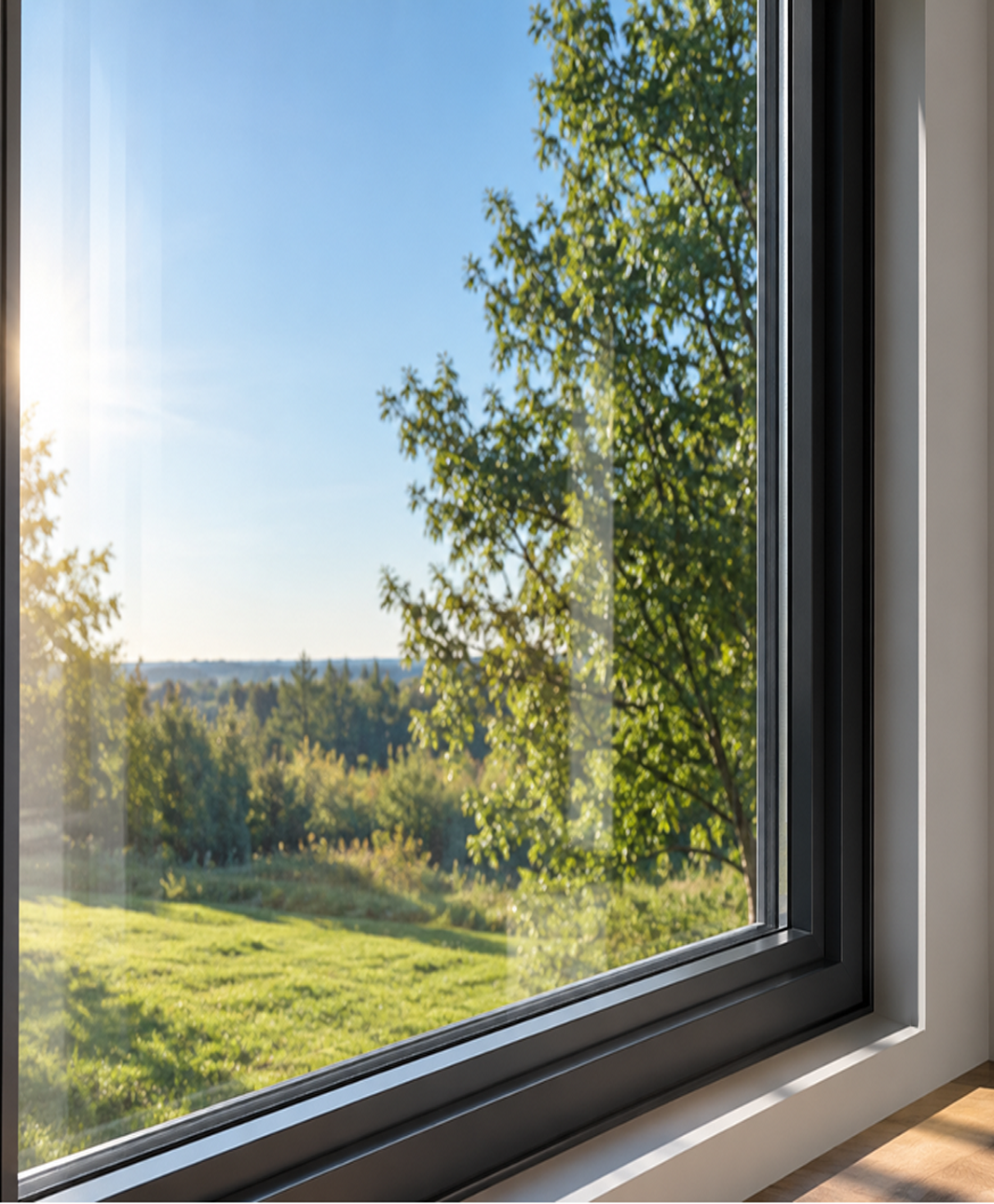
Birds, however, don’t inhabit spaces and operate within them the same way nor live within the same spatial contexts that we do. The areas outdoors where they make their nests, search for feed, or engage in their migratory patterns are open and expansive, well-suited to flight, and with obstacles clearly visible along with the space they occupy. Glass, however, tricks birds by showing them what is on the other side or reflecting their surroundings right back at them. A transparent pane might suggest a safe route towards open space while a reflection might suggest there are more trees when there are in fact none. The end result in either case is the same, with birds seeing an inviting space and flying towards it the same as they would any open space, resulting in a painful and often fatal collision.
The consequences of encounters like this are telling. According to one study, the American Bird Conservatory (ABC) estimates that glass collisions are the cause of more than a billion bird deaths annually in the United States alone. Collisions such as this occur to both residential and migratory birds, rare species as well as the more common ones, and are endemic to buildings of all sizes – not just skyscrapers or large residential complexes. In other words, anywhere that there is a window, there’s a risk of a collision.
Understanding Current Evaluation Procedures and Their Limitations
The goal of bird-safe glass is simple: reduce and if possible eliminate collisions. The challenge, however, is determining which products, materials, design approaches, and strategies will actually achieve the desired result.
While there is no single answer, the current industry trajectory, as noted in a recent article published in Glass Magazine, is one that favours formalized testing and documentation. Owing to the absence of any single framework or methodology for bird-safe that has been universally accepted by the industry, a number of stakeholders (including architects and legislators) argue for pre-installation testing that assesses both the bird-deterrence and architectural performance of the glass.
This argument, on paper, might sound entirely reasonable at first glance. Bird-friendly glass should be evaluated and have its performance understood based on its deterrence as well as its architectural function as glass. It must also do so long-term, holding up under weather, cleaning, and other expectations of the surface. Who then, as Vitro Architectural Glass and others have concluded, would be better suited to test the performance of such products than the companies manufacturing them? That, however, opens the door to a potential conflict of interest. And even where rigor is applied, each of the five testing procedures put forward in that same article mentioned above (gloss, abrasion, strength, stain, and weathering testing) largely focuses on ensuring the structural integrity of the glass remains intact after it is made bird-safe, rather than evaluating the overall deterrence efficiency which would prevent collisions in the first place.
Other commonly accepted testing initiatives exist, including the American Bird Conservatory tunnel test. Originally designed by ornithologist Dr. Daniel Klem in the 1970s and later modified, the tunnel test seeks to understand how effectively birds perceive and avoid bird-safe materials in glass. As avoidance is a major part of deterrence, one can surmise that in a test setting, birds that would avoid bird-friendly glass in the wild as well. However, the current form of the test raises questions with how it unfolds and its conclusions are drawn. In this case, during the test, birds are live captured with a net and released inside a 24-foot darkened plywood tunnel with a brightly lit exit. At the end, they are presented with a choice between two side-by-side glass panels, one standard control piece and the glass being evaluated. Before a collision occurs, the bird is (in theory) safely plucked from the tunnel, but not before researchers determine which choice of glass the bird appeared to be choosing for its escape route. Glass that birds avoid in favour of the clearer option is then awarded a threat level score suggesting its overall potential for deterrence.
While this particular test is among one of the closest to an industry standard, including being used to legislate the criteria for bird-friendly solutions in certain jurisdictions, such as with Local Law 15 in the State of New York, it is not without its challenge. The testing, as described, occurs in a controlled, highly artificial environment. Birds are plucked from their natural environment and forced to navigate a darkened, constricting testing setting. The current state of agitation as well as the behavioural differences between how different species of birds behave in captivity settings is not factored into the test parameters, nor is the reflectivity of the glass measured (which changes based on the time of day or angle of the sun). As such, while any test can be controlled and repeatable, testing conditions as we know them nevertheless bear little resemblance to the actual environments in which birds might encounter glass on building facades, raising more than a few questions about the applicability of its findings.
The Challenges of Real Buildings in Real Environments
As is apparent from nature, birds do not typically encounter glass in controlled, isolated settings. Windows, instead, make up just one part of a larger and more spacious environment, one that often involves courtyards, wooden areas, or even an expanse of open sky reflected in the glass. Birds make their home and feel most comfortable in spaces like these, which is also where they spend most of their time. Moreover, as much as we might think of buildings as unchanging fixtures in our landscapes, the windows adorning them are hardly static. Reflections can vary according to season, cloud cover, weather patterns, and even time of day. Similarly for the transparency as the brightness of the interior space behind the glass also typically changes as we switch on lights in the afternoons and evenings.

Further complexity is added into our equation if we factor in elements common to real environments like curtain walls, atriums, walkways, balconies, and other factors that factor into collision risk. Taken together, dynamic real-world conditions such as these are among the main reasons why the efficiency of reducing bird to glass collisions is difficult, if not outright impossible, to assess through artificial testing environments, no matter how much the teams undertaking these experiments promote the process. As such, taking into stock the conditions and setting of a complete, real-world structure.
Bird-friendly glass, therefore, cannot be evaluated only as an isolated building material but part of a larger site. The goal, after all, is not simply to determine whether birds avoided one sample or another in an artificial environment but whether the product does indeed reduce collisions once the building is occupied, weathered, and encountered by birds over time in their natural environment. Only post-monitoring of the site and its glass in the years to come will be able to tell the complete story of a window’s true performance in reducing collisions.
Post-Monitoring: The Missing Piece in Product Evaluation
Post-monitoring is what connects anticipated product performance with real-world outcomes. Kurt Hundgen, Senior Director of Animal Care and Conservation Programs at the National Aviary, remarks that “If your glass area is having collision issues prior to bird friendly glass installation, then post installation monitoring is critical.”
Rather than operating in a closed lab, post-monitoring involves tracking bird collisions after a bird-friendly glass solution has been installed and using real data when determining whether the product performs as expected. Its purpose is not meant to replace testing altogether, as indeed testing can help prepare materials before installation and ensure they are made to certain industry specifications, but rather to answer in a verifiable fashion: does this product in fact reduce collisions once installed on a real building away from the controlled laboratory setting? In this sense, post-monitoring fills in the much-needed validation gap about collision reducing products that testing fails to cover.
Fortunately, while testing might involve complicated laboratory conditions or highly specialized equipment to meet its evaluation criteria, post-monitoring strategies are decidedly simpler to implement. In practice, post-monitoring often involves simple actions such as regular patrols around a building, maintaining documentation of collision occurrences, and closer monitoring of the site during seasonal migration periods. That doesn’t mean monitoring should be casual or anecdotal, but rather by keeping track of recorded or observable collisions over a defined period of time monitoring offers a quantifiable, tangible result that can be clearly communicated to sustainability managers, conservation groups, the public, and other stakeholders.
Post-monitoring should therefore not be merely an optional follow-up exercise, but the crucial and often missing piece in complete product evaluation. Rather than relying on hypothetical testing scenarios alone, it truly demonstrates the real-real world performance and viability needed to give architects and building owners the confidence needed in a product’s practical performance. It also allows for the glass industry to learn from and base future specifications on completed projects and their post-monitoring results, without falling into the danger of too heavily relying on any single testing methodology or laboratory baked data. As such, post-monitoring tells us about the true history of a given site and product, as well as the future of other sites seeking to reduce collisions.
Get inspired by bird-friendly design
Discover how AviProtek® bird-friendly glass solutions are incorporated into real-world projects across North America. From diverse architectural styles to a wide range of settings, this collection showcases the possibilities of bird-friendly glazing.
We invite you to explore the projects and find inspiration for your next design.
Case Studies
Post-monitoring is not simply a hypothetical approach for measuring and understanding the efficiency of bird-safe glass the way laboratory testing operates, but an ongoing prerogative at numerous sites where such products have already been installed.
The following case studies highlight instances where monitoring has been ongoing and positive results have been observed using 2×2 first-surface solutions such as Gardner Walker’s own AviProtek®.
Cedar Hill Library

Located in North Texas near Cedar Hill State Park, the Cedar Hill library sits at the epicenter of the community and local wildlife. Vying to become a “library in a park,” incorporating bird friendly glass into the project was essential for harmoniously integrating the site with the complex natural topography of the area. The site features windows with AviProtek® E glass, pattern 211 on surface 1, and sits in the middle of a park surrounded by trees and bird habitats.
Correne Constantino, Library Assistant Director of the site, highlighted the importance of choosing bird friendly glass for the site. “We consider the Bird-Strike Glass that was installed as part of our new library’s construction as one of our greatest investments,” she said. “As a Library in a Park and because Cedar Hill is distinguished as a Bird City, it is so important for us to protect our native birds.”
One of the concerns going into the project was understanding the true threat factor of collisions once the solutions were installed at the site. Threat factor ratings, in lay person’s terms, are a numerical value that the American Bird Conservatory assigns to different products through their testing processes. A rating of 25, for example, would indicate that approximately a quarter of birds during its test failed to avoid the bird-friendly solution, while a rating of 30 (which is often pointed as the upper ceiling of viable efficiency) would mean even more birds failed to avoid the glass solution. Importantly, various jurisdictions, including New York State, legislate according to this test, requiring that for a solution to be considered viable, it cannot exceed a maximum threat rating of 25.
Prior to installation, the solution intended for the site was rated at threat factor 23. While this was certainly suggestive of reducing collisions, it was nevertheless just a few points shy of the upper limit of viability. Thus, if taken at face value of the threat rating, the solution would certainly reduce collisions but not eliminate them altogether. However, post-monitoring initiatives at the site undertaken in the years following installation told a different story.
In the words of Constantino, “In the two and a half years since we opened the library’s doors we’ve only had one bird fatality and it was in a location where the bird-strike glass was not installed.” In other words, despite being rated with a significant threat factor through artificial testing, the solution exceeded expectations when installed in a real environment, highlighting some of the many issues with controlled testing.
National Aviary

Located in Pittsburgh, Pennsylvania, the National Aviary sought to underline the intentionality of its design choices with the quality of its glass when it came to reducing bird collisions on site. Bird friendly glass adhering to the 2×2 rule was installed at multiple locations, including the Garden Room, which offers a stunning view overlooking the Rose Garden and Lake Elizabeth, and the Tropical Rainforest habitat, which offers an enclosed space within where plants, birds, and visitors could co-exist, were crucial sites for installing bird-friendly glass.
Speaking of the need for bird friendly glass for use in enclosed habitats, Conor McGarvey, Director of Buildings and Grounds, emphasized that “Everything is really, really lush. It lends itself well to the birds that are in there, that sun themselves up in the canopy.” In the first two years that post-monitoring was performed, not a single strike was recorded. In the two and a half years since, a single collision was detected.
Prior to installation, the solution vied in place for the Garden Room was rated at a threat factor of 29 – one point shy of no longer being viable according to standardized testing. However, when reviewing the data from the post-monitoring efforts, no collision on the building was detected, raising questions as to whether the solution and environment merited such an elevated rating, or whether the methodology for testing was flawed in the first place.
Commenting on this, Sam More, Director of Guest Operations, commented that “[Having] tons and tons of glass, regularly monitoring that space and not having any bird strikes… I think it is a testament to the treatment of the glass, and to the intentionality with which that space was built.”
The Nature Place

Located in the middle Angelica Creek Park, Pennsylvania, the Nature Place center is surrounded by 100 acres of trees and wildlife. As an organization heavily invested in the land preservation efforts, water protection, trail management, and the community gardens, the need for installing bird friendly glass at the Nature Place was never in question. Indeed, Kim Murphy, President of Berks Nature, encouraged staff to highlight site efforts to minimize the risk of collisions and to turn it into an educational talking point for visitors.
Most visitors, she remarked, were unaware that the glass installed on site was any different than regular glass. “It’s almost like they didn’t even see it until we pointed it out,” she said, commenting on how subtle the differences were with bird-friendly glass adhering to the 2×2 rule with custom horizontal patterns at the site.
Importantly, and similar to the other case studies, since post-monitoring began following its installation in August 2024, not a single collision has been detected.
Conclusion
Based on the data raised in the case studies, the emphasis placed on pre-installation testing should not overshadow post-monitoring as it tends to do in industry and among legislators.
As Dr. Leanne Grieves of the University of Saskatchewan remarks, in an ideal world “companies that design bird-friendly solutions would have the resources and means, ideally in collaboration with expert research teams, to conduct rigorous testing on the efficacy of their products that would limit the need for post-monitoring.” However, this is not the case.
Until we have devised a series of standardized tests that overcome the challenges of applying laboratory learning to real environments, post-monitoring needs to remain an essential qualifier of a product’s efficacy at reducing collisions.