Product Selection, LEED Credits, Warranty, and Handling
PDF — Technical
AviProtek® T is well suited for use in guard rails, linkways, and shelters. This product can also help with project certification under LEED® and other green building rating systems.
| Feature | AviProtek® T Transparent · This page | AviProtek® Standard | AviProtek® E Low-e Bird Safe | AviProtek® Turbo High Volume |
|---|---|---|---|---|
| Bird friendly pattern | UV-reflective on surface 1 | Acid-etched on surface 1 | Acid-etched on surface 1 | Acid-etched on surface 1 |
| Energy-efficient low-e coating | Can be used on surface 3 | Can be used on surface 3 | Included on surface 2 | Available on surface 2 |
| Visibility of patterns to the human eye | Almost invisible | Visible but unobtrusive | Visible but unobtrusive | Visible but unobtrusive |
| Compliant with bird safe design requirements across North America | ✓ | ✓ | ✓ | ✓ |
| Threat factor ratings from ABC | No | ✓ | ✓ | ✓ |
| Impact on light flow | Minimal impact | No impact | No impact | No impact |
| EPD and HPD available | ✓ | ✓ | ✓ | HPD only |
AviProtek® E bird friendly glass can contribute to the following credits under LEED v4.1 Building Design + Construction (BD+C).
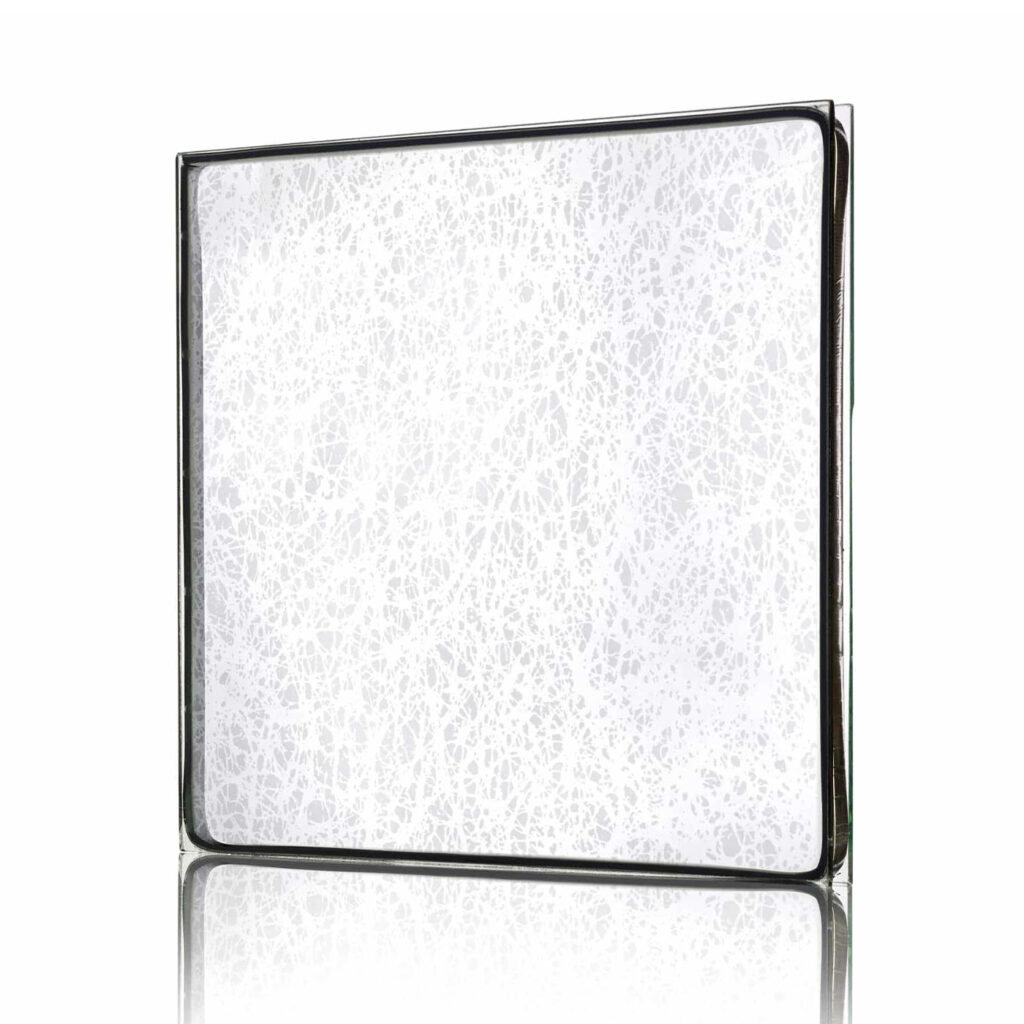
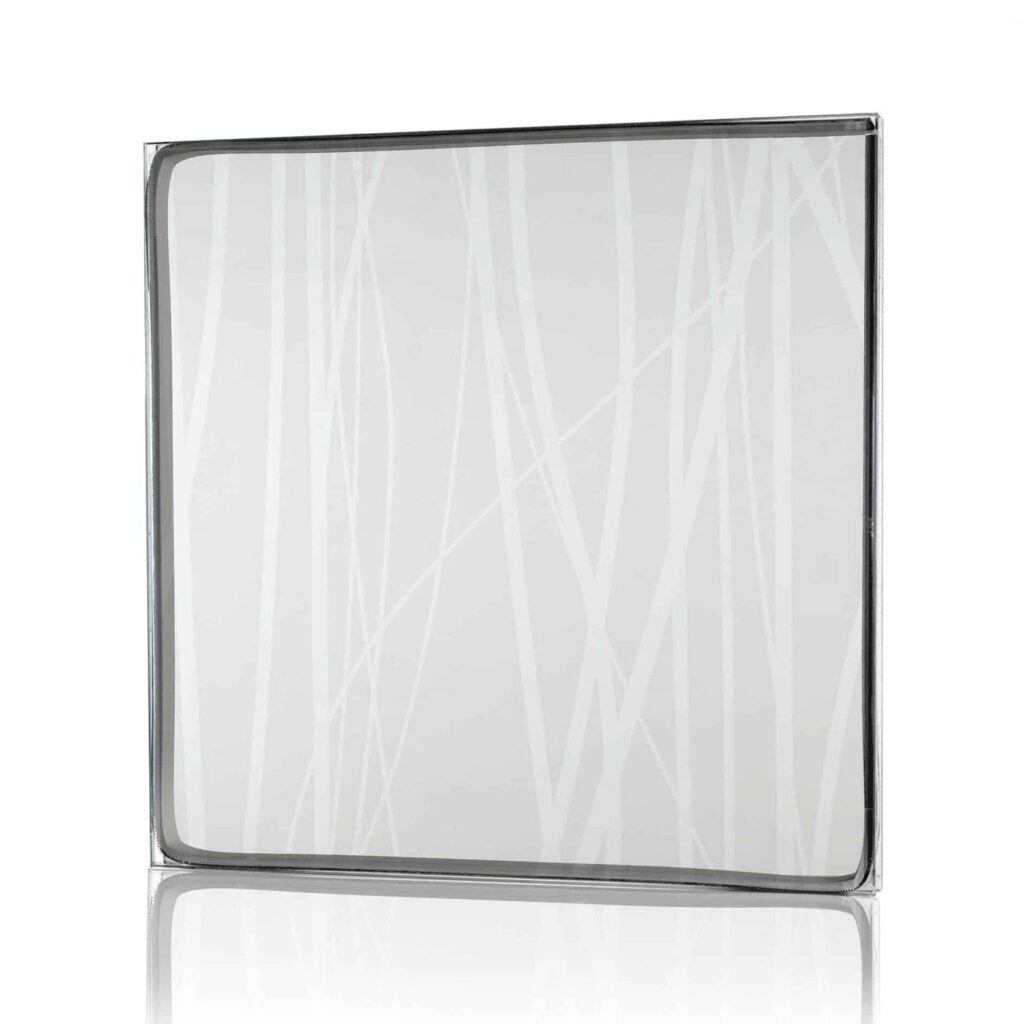
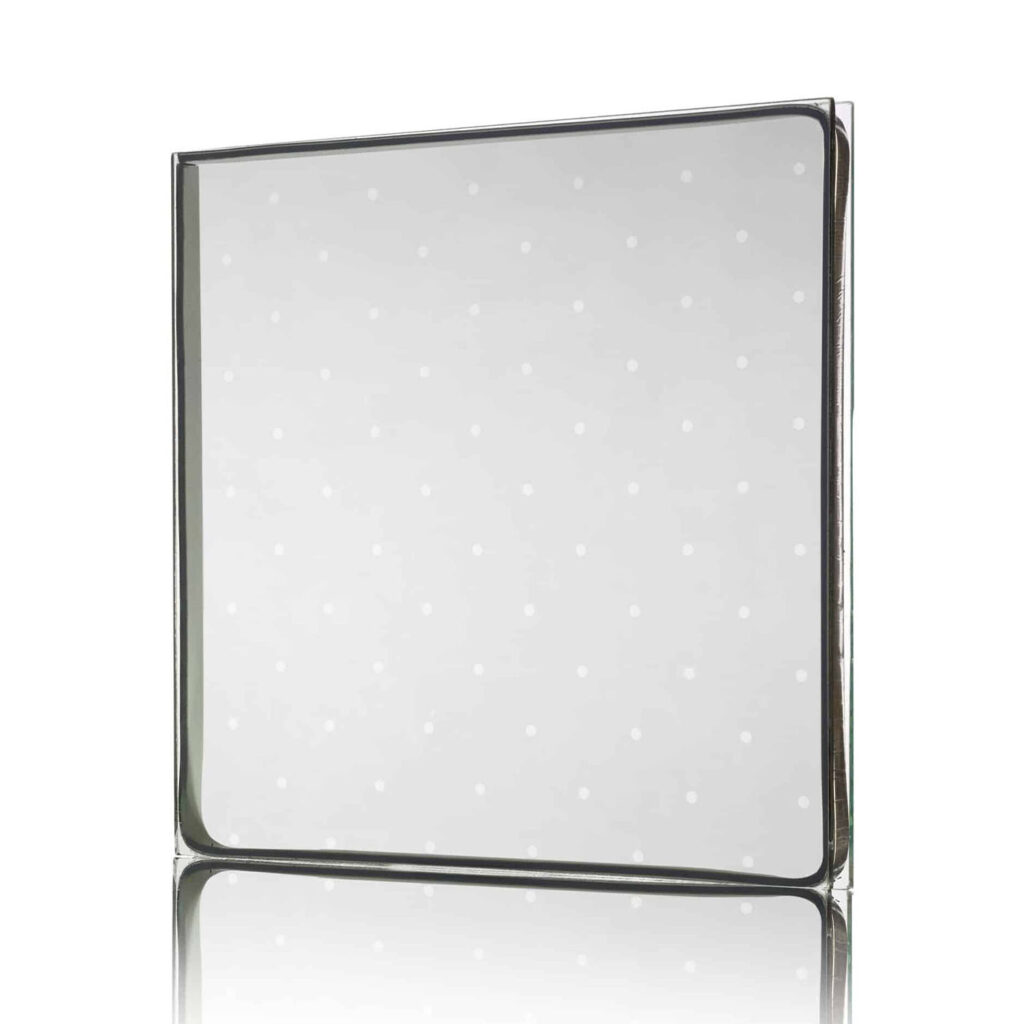
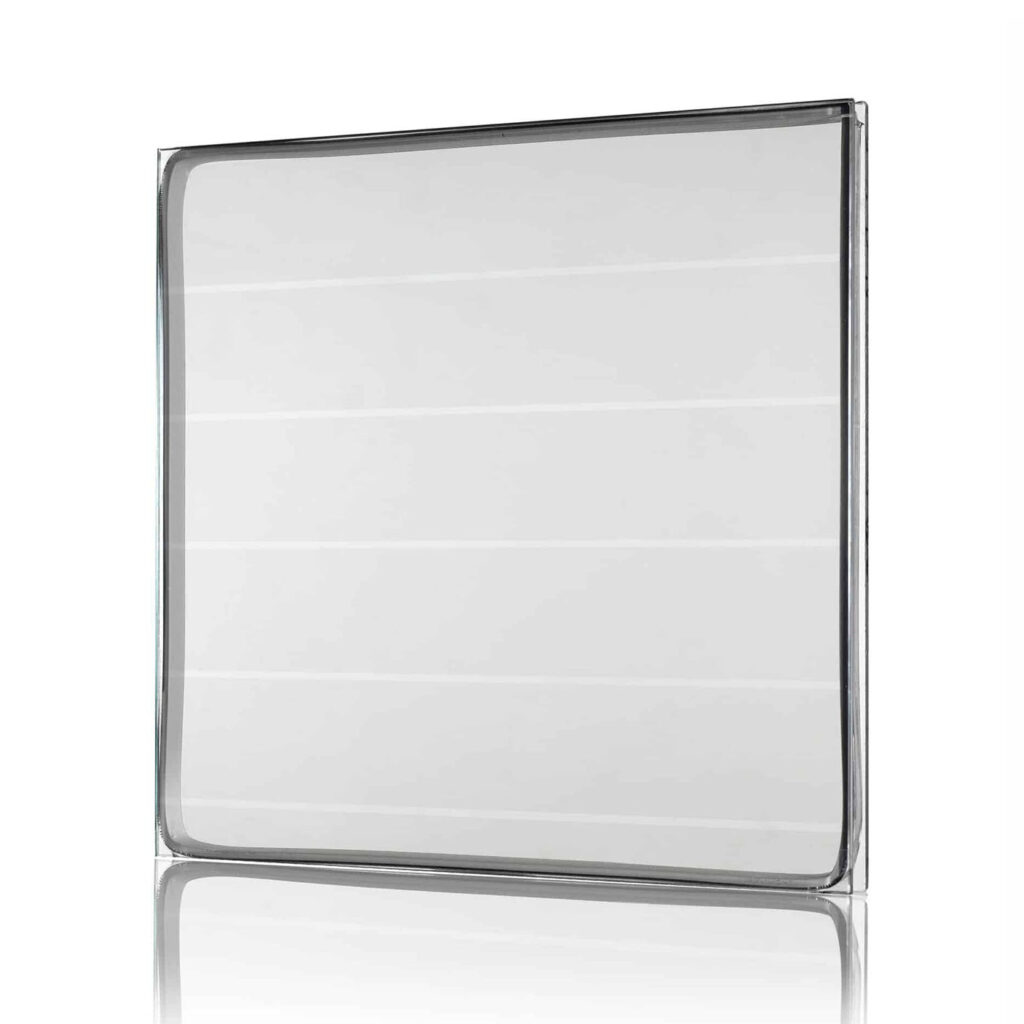
AviProtek® T isn’t just different, it’s more discreet. Instead of acid‑etched patterns, we use Pilkington North America high‑performance pyrolytic UV coating and create contrast that birds can see but barely noticeable for people.
Yes, the AviProtek T stock patterns do meet the industry-recognized 2×4 rule. Patterns like the 717 are also accepted under the Canadian Standards Association’s CSA A460:19 bird-friendly building design standard. The first surface UV AviProtek T has been validated through field testing by Dr. Daniel Klem of Muhlenberg College.
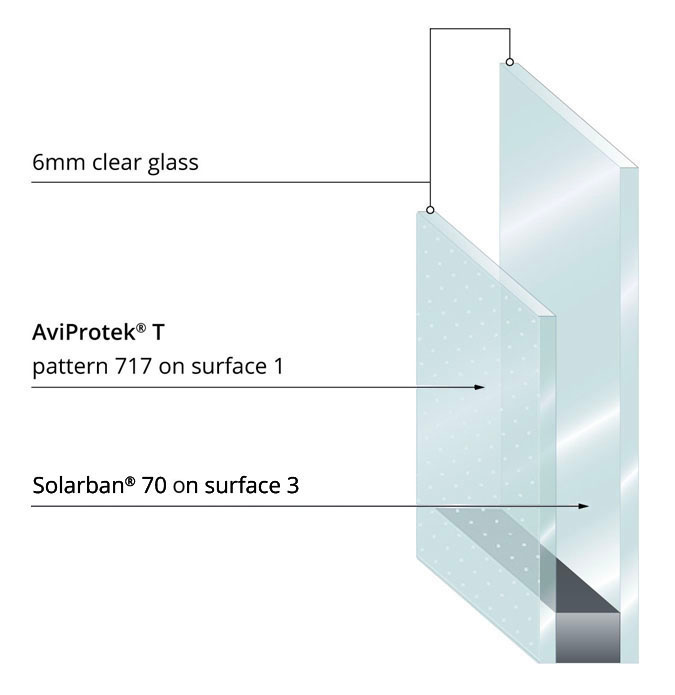
The pyrolytic coating is on surface 1 (the exterior-facing surface) of the IGU. It can be paired with the low-e glass of the building professional choice on surface 3, providing both bird-friendly protection and energy performance in the same unit.
AviProtek T can be use in insulated glass units but also in guardrails, linkways, and shelters where applications are a highly transparent and minimally visible bird-deterrent surface is preferred over a more visually obvious pattern.
Not especially, the UV coating doesn’t reduce in a meaningful way the visible light transmittance compared to standard clear glass.